CONCIERTO 4 | TEMPORADA 31
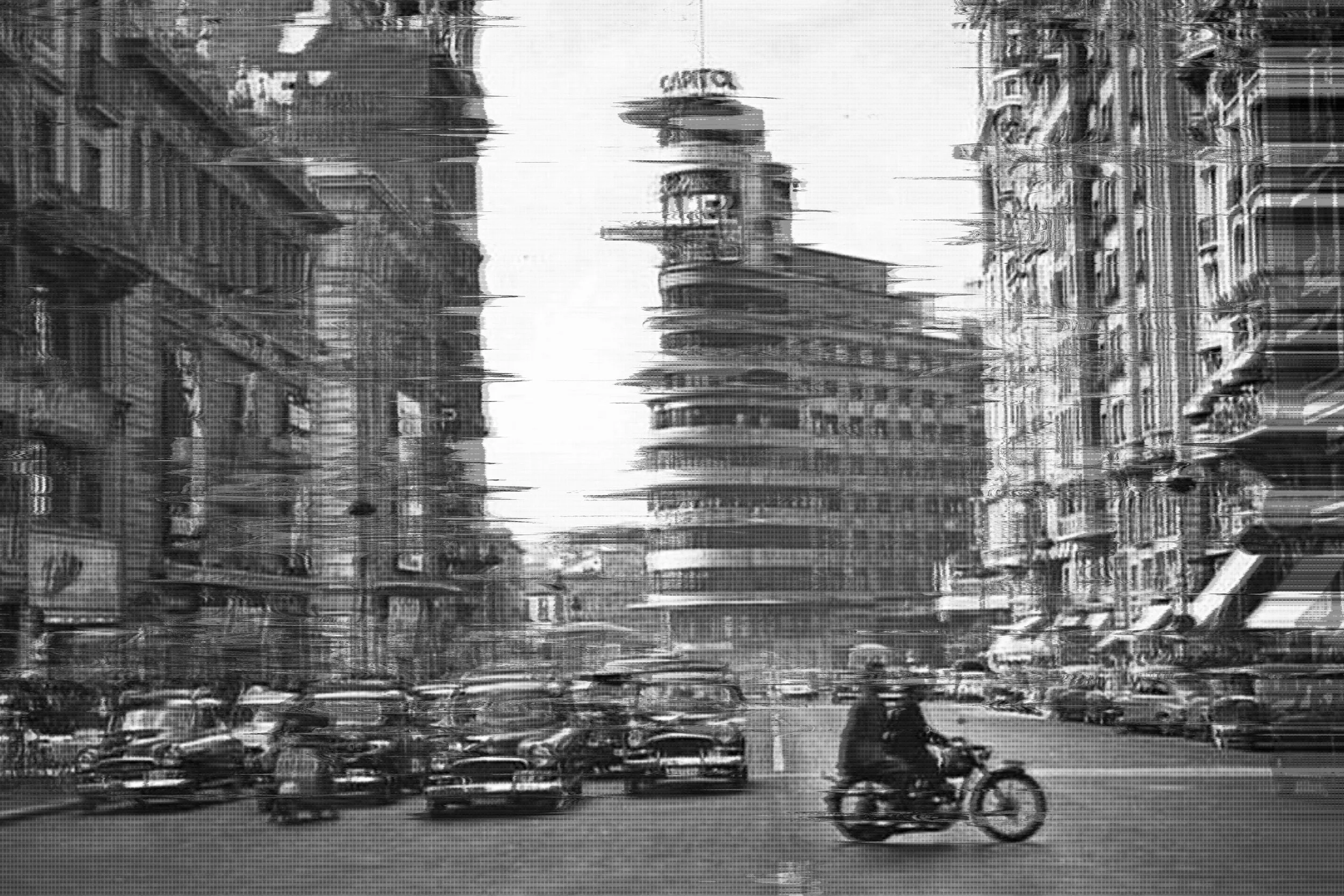
madrid, bajo el volcán
April 14, 2026 - Sala Galve - 7:30 p.m.
“Behind the false modernity we have experienced, there is a pit and a swamp that remain, increasingly rotten,” the writer Rafael Chirbes stated regarding what the so-called Spanish Transition concealed during the turbulent and confusing seventies. This program explores precisely that decade, fifty years after the dictator's death, and does so on the occasion of the sixtieth anniversary of the creation of the Estudio Alea laboratory, the first electronic music laboratory in our country.
In 1965, Luis de Pablo founded an association in Madrid—thanks to the financial support of the Huarte family—dedicated to promoting contemporary music emerging in Europe. Gradually, Estudio Alea, as it was called, became the first electronic music studio in Spain. Its facilities hosted diverse creators such as Tomás Marco, Francisco Guerrero, Horacio Vaggione, and Eduardo Polonio, as well as artists from various disciplines interested in the new developments taking place there. Some of the first Spanish electroacoustic compositions were born in this space, works that showcased the full breadth of electroacoustic creation to the Madrid public for the first time.
This concert presents a selection of pieces created in that studio, as well as within the context of 1970s Madrid. The work of Eduardo Polonio, a pioneer of electronic music in Spain, is particularly noteworthy, with pieces such as El replinatorio en el tejado de la lejana abadía (1971), a seminal work from this period. From 1972 onwards, Polonio and composer Horacio Vaggione began working primarily on live improvisation with electronic instruments over pre-recorded tapes in the studio.
In 1976, they released the recording of what is now considered a cult classic of Spanish electronic music: It/Viaje . We will hear side A, where synthesizers, electric guitars, and organs merge, saturate, and explode in a psychedelic sonic bacchanal.
Luis de Pablo, whose death five years ago we commemorate, was a pivotal figure in Spain during that era. His work was decisive both in the creative field and in the management and promotion of festivals and projects that shook the artistic scene of the time. From his output, we will hear two contrasting pieces for solo flute: one composed before the founding of Estudio Alea and another afterward, as well as his collaboration with Javier Aguirre's "anti-cinema."
This concert includes, as a counterpoint, several short films by another essential figure of those years: the filmmaker Javier Aguirre. During the sixties and seventies, Aguirre combined films of very diverse genres—from horror to softcore films, alongside performers like Lina Morgan, Parchís, and Concha Velasco—which allowed him to live and finance his true passion: his “anti-cinema” works, experimental short films at the visual avant-garde of their time. Numerous composers collaborated on these films, including Luis de Pablo, Eduardo Polonio, Ramón Barce, and Francisco Guerrero, among others. Throughout his eight experimental films, Aguirre sought to break with formal conventions and push cinema to its very limits, because, as the actress and director's wife, Esperanza Roy, stated: “Javier's blood is celluloid.”
The program is completed with Julia -1.376, 0.978 , a work for flute by the Aragonese composer Carlos Satué - a student of Francisco Guerrero and Tomás Marco, among others - an example of the generation of creators that came after the Alea Studio.
PROGRAM
Eduardo Polonio (1941-2024), El reclinatorio en el tejado de la vieja abadía (1971)
electronics
Luis de Pablo (1930-2021), Condicionado (1962) y Lerro (1977)
flute
Javier Aguirre (dirección) / Luis de Pablo (música), Uts cero (1970)
short film
Carlos Satué (1958), Julia -1.376, 0.078 (2017)
flute
Javier Aguirre (dirección) / Eduardo Polonio (música), Impulsos ópticos en progresión geométrica (realización I) (1970)
short film
Radio Nacional de España, boletín 20 de noviembre (1975)
recording
Horacio Vaggione (1943) y Eduardo Polonio (1941-2024), Viaje (A1) (1976)
electronics
Fernando Gómez, flute