CONCIERTO 5 | TEMPORADA 31
La revolución es una eztétyka
May 11, 2026 - Sala Mozart - 7:30 p.m.
In April 2025, the Austrian composer Peter Ablinger passed away. His work fostered new ways of listening and explored noise as musical material. Instrumente und Rauschen (Instruments and Noise) is a series of 24 pieces in which the listener perceives approximately 20 seconds of “elementary” instrumental music, almost entirely hidden behind a curtain of white noise that plays continuously through the speakers. A return to our origins, as Ablinger himself observed: “White noise, static noise, is probably one of the first sounds of which human beings were conscious.”
José Manuel López López is one of Europe's great composers. Throughout his 70 years, he has received numerous awards, including the National Music Prize (2000), the Francis and Mica Salabert Prize, and the René Dumesnil Music Prize, awarded by the French Academy of Fine Arts. The powerful and personal work of José Manuel López López stems from an understanding of sound as a living, almost biological entity, and of composition as the means by which to explore the scientific realm of sound.
The piece "La pluma de hu" (The Hu Feather) is inspired by a story by Italo Calvino, in which a hu (peacock) feather is the only one capable of restoring sight to the blind. With this work, López López creates a composition where he continues to explore timbre and its evolution over time, but fragmented and spatialized through rhythm. "I'm interested in the tension between internal transformations and external forms (harmony, rhythm, texture), from which sonic hybrids are born that reflect our time. As in biology, where the satisfactory takes precedence over the perfect or the optimal," concludes López López.
Composer Chaya Czernowin, recent composer-in-residence at the renowned Musikverein in Vienna and Distinguished Artist of our group, returns to the season to premiere in Spain one of her great compositions: Seltene Erde: alchimia communicationis (Rare Earth: alchemy of communication) for solo double bass, 4 pre-recorded double basses and ensemble.
“The solo double bass and its recordings are the very foundation of this work. The ensemble is divided into small groups that interact with one another. There is something illusory and ephemeral about their interaction, as if they were moved by invisible forces. These invisible forces create temporal gaps where the ensemble and the double bass come together, forming a single body in constant transformation,” explains the composer. The soloist will be Evan Hulbert, double bassist with the renowned Klangforum Wien in Vienna.
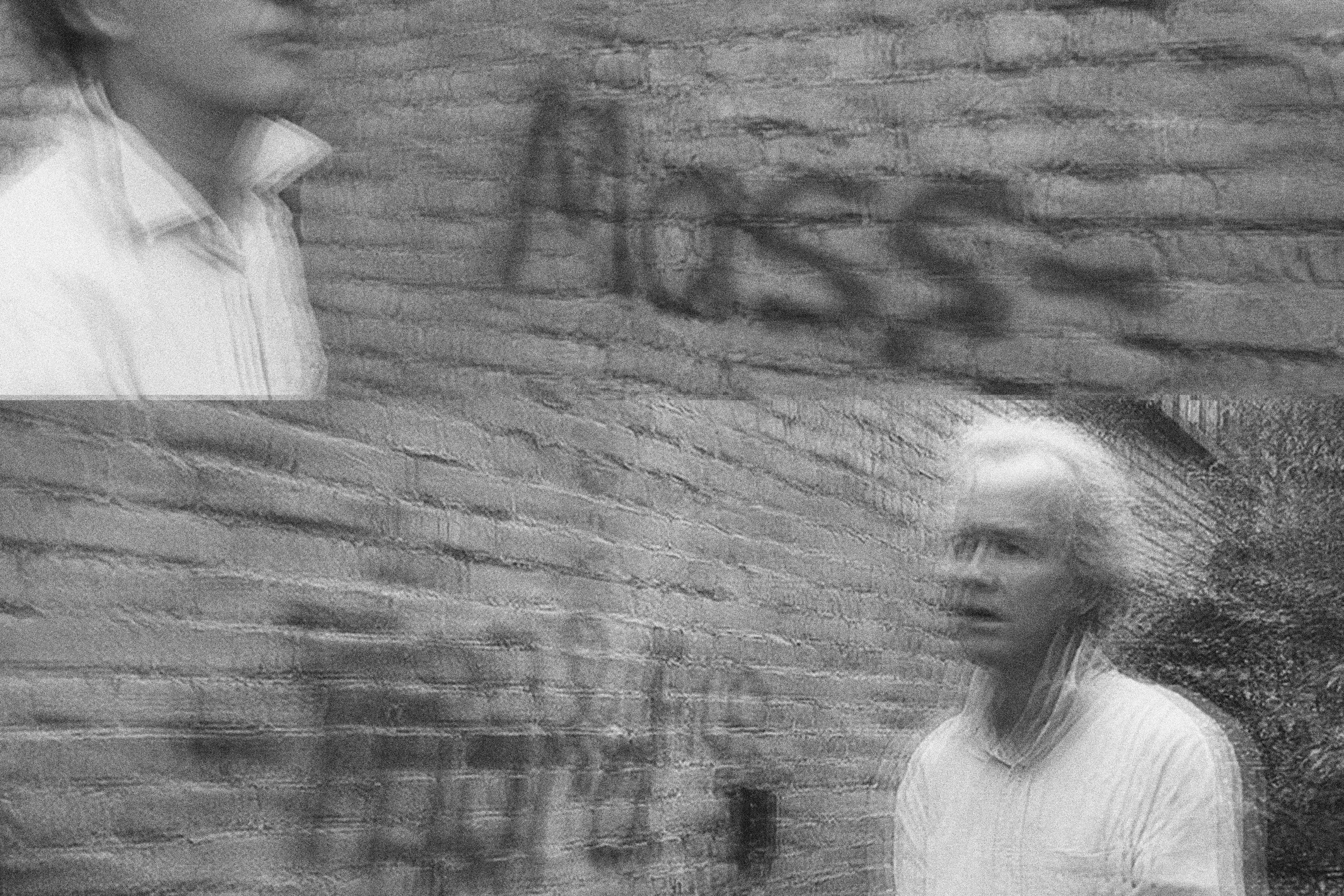
The program concludes with one of the earliest recordings of a Schubert work, made by Theo Wangemann, the same man who recorded Brahms performing his music. In this recording, due to the technical limitations of late 19th-century recording equipment, we hear a curtain of noise, and behind it, the voices of baritone Karl Mayer and pianist Franz Wüllner performing the second lied from Schubert's Die schöne Müllerin ( The Fair Maid of the Mill). This recording could easily be mistaken for a work by Peter Ablinger, and we wish to dedicate it to him as a tribute and remembrance for having shown us the (sometimes violent) beauty of noise, because, as filmmaker Glauber Rocha said, "an aesthetic of violence, rather than being primitive, is revolutionary."
PROGRAM
Franz Schubert, primera grabación de una obra suya: II. ¿A dónde? - La bella molinera (1890)
recording
Peter Ablinger (1959-2025), Instrumente und Rauschen “24 short pieces”* (1995-1996)
José Manuel López López (1956), La pluma de Hu (2000)
Chaya Czernowin (1957), Seltene Erde: alchimia communicationis* (2022)
*Premiere in Spain
Evan Hulbert, solo double bass
Asier Puga, musical and artistic director